





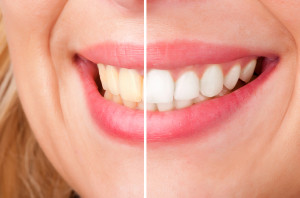
 There are many types of treatments within the sphere of Cosmetic Dentistry.
Some of these treatments include: bonding, porcelain veneers, crowning, grafting, recontouring, gum bleaching, gingivectomy surgery, and straightening.
One of the single most popular cosmetic dentistry treatments is teeth whitening and bleaching. This is a highly sought after procedure and almost 18 billion dollars is spent every year on this in the United States.
What is a tooth whitening process?
The process involves undergoing a procedure that eliminates stains and discolorations from teeth. A whitening process is very popular because it transforms the look of a person’s smile which can transform confidence. There is nothing as gorgeous as a shiny, white smile. Once teeth get stained again or discolored they must be treated with a whitening process again to regain the brightness.
Some common causes of stains and discolorations include things like:
The teeth whitening process is usually effective on extrinsic or surface stains rather than intrinsic stains or those that are on the inside.
Types of whitening
There are two tooth whitening types. There are vital and non-vital whitenings. When teeth that still have nerves go through whitening, they go through vital whitening. Teeth without live nerves like those following a root canal go through non-vital whitening. Bleaching teeth is done when a dentist applies a whitening gel or paste to the surface of teeth. The substance contains a whitening agent like hydrogen peroxide.
A common version of vital tooth whitening involves the use of a gel whitening solution that gets applied to the surface of the teeth. It also contains a form of hydrogen peroxide.
Dental Bleaching
This form of whitening is very common in cosmetic dentistry. Bleaching is a term that refers to the procedure that happens when teeth are given a lighter color than their natural shade. This process makes use of things like carbamide peroxide. The dentist uses a special laser that activates the bleach gel.
Today’s bleaching makes use of modern equipment, but it is truly an ancient practice once used by the Romans. During the ancient times, they used urine and goat milk to brighten teeth.
Whitening Versus Bleaching
There is a difference between the two types of treatments. Whitening gets rid of surface stains and discoloration on the teeth. Bleaching uses chemicals like carbamide peroxide and hydrogen peroxide to get beyond and beneath the surface. This type of treatment can only be used on teeth if they are healthy enough to be whitened beyond their natural color or shade.