





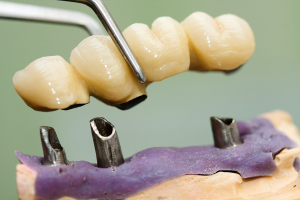
 To begin with, the consultation and planning stages involves the dental surgeon inspecting areas inside your mouth to decide where a dental implant should go when you require one.
The surgeon will examine these areas with dental-imaging technology which includes CT scans and X-rays. The planning process also involves inspecting your jawbone in order to decide whether you have enough bone quantity and density in order to support an implant.
Your dentist at this stage may also discuss other options available to you, or educate you about dental implants and how they work.
If your dentist decides that the dental implant can be supported, you will be provided with a follow-up appointment to install the dental implant through a surgical procedure.
On the day of the surgery, the dental surgeon will administer a local-anesthetic which will numb the site completely along with a sedative when necessary, if you are extremely anxious.
In most cases, initial stages for dental implant surgery involves removing the damaged or compromised existing tooth. In most cases, it becomes necessary for the surgeon to insert what is known as an alveolar bone-graft. This is a material made from cadaver or synthetic bone. The graft offers a foundation that is solid for your implant to attach to. Once the bone graft is inserted, it usually requires between 2 to 6 months for your mouth to heal, before your dental implant will be placed.
When the location for the implant is already missing a tooth and there is bone-loss present, onlay grafts are usually the next best option. This graft type is more complex and involved in comparison to alveolar grafts. They typically require at least 6 months sometimes more before you can have the permanent implant installed, so that your mouth has enough time to heal.
If you have enough bone present in order to support a dental implant, in some cases it is possible to have your implant inserted on the same appointment that your old tooth is extracted.
Similar to many other products and procedures, dental-implant surgery varies significantly in costs which will depend on who performs the operation along with what you will have done.
Generally, do not expect that your cover for dental insurance will cover costs involved with dental-implant surgery. Certain insurance providers may assist with the costs for your crown, but usually they will not contribute to any other costs involved associated with the surgery itself. The reason for this is that the majority of the dental-insurance provider regard dental implants as a “cosmetic” or “elective” procedure that is not seen as strictly necessary.
This is still unfortunately the case, even though dental-implant surgery is now the de-facto standard option to replace missing teeth. The dental implants are a popular choice to replace a missing tooth or teeth due to a 98% success rate, along with offering a somewhat conservative approach in order to solve such a common problem.
Like any other type of surgery, dental implantation is associated with certain potential risks. The surgeon will first check for potential pitfalls that can include allergies, medical conditions, bleeding disorders, or any other type of issue regarded as a concern when it comes to the surgical procedure. Luckily, success rates for this type of procedure is extremely high which means it is highly unlikely that you will experience problems that are serious.
The failure for this type of surgery, even though extremely rare, may result from a fracture in the implant, unusual infections, inadvertent damages caused to nerves to the immediate and surrounding areas of the implant, and excessive strain caused to the implant. In general, provided you are using a qualified and experienced dental surgeon, it is unlikely that you will experience any of these issues.
In a worst-case scenario situation where something has gone wrong, your dentist should in most cases find a way to reattempt your procedure, by first giving your mouth sufficient time in order to heal.
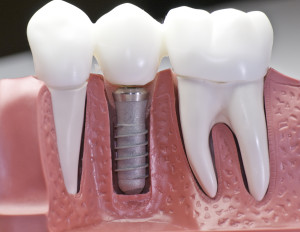 When the actual dental-implant is installed, the anesthetic you have been given will completely numb the area. This should stop you from experiencing any feelings, pain or discomfort over the course of the procedure. Once the treatment is complete and your anesthetic has worn off, the discomfort or pain you will experience varies from one person to the next.
In most cases, people go through the process of healing which involves the same levels of pain or discomfort to having a tooth extraction.
Your dentist will prescribe pain medication or you can use an over-the-counter brand such as Advil (Ibuprofen) or Tylenol (Acetaminophen). You can also use an ice-pack or cold compress over the affected area to help the swelling to go down. If your surgery was a bit more invasive, a prescription pain killer is usually needed. You dental surgeon may also prescribe a mouth rinse and antibiotics to assist your mouth with healing and to prevent an infection.
We hope this article has answered any concerns or questions you may have about dental implant surgery. If you are interested in dental implants contact Stony Brook Family and Laser Dentistry in Suffolk County, Long Island to find out if they have recommendations on who can perform such a surgery.